
Blog

Is There a “Best” Neighbourhood in Nanaimo?

(And Why That Question Might Be the Wrong One)

Every few months, someone asks it.

“What’s the best neighbourhood in Nanaimo?”

It’s a fair question. When you’re moving, investing, or even just thinking ahead, it feels logical to look for the top-ranked area… the safest bet, the strongest appreciation, the most desirable streets.

But Nanaimo doesn’t work that way.

This isn’t a city with one obvious centre of gravity. It’s not built around a single downtown core that radiates outward in predictable tiers. Nanaimo stretches along the coastline, climbs into hills, dips into valleys, and weaves between forests and highways. It is layered — geographically and socially — and those layers matter.

Two homes five minutes apart can feel like completely different lifestyles.

So before we try to rank neighbourhoods, it’s worth asking a better question:

What actually makes a neighbourhood “best”?


Geography Shapes Everything Here

In Nanaimo, geography quietly determines experience.

Elevation affects views, yes — but it also affects wind exposure and winter light. Proximity to the ocean might offer beauty and walking access, but it can also mean salt air maintenance and stronger coastal weather. Hills create privacy and perspective, but they also change commute patterns and walkability.

A list ranking North Nanaimo above Central Nanaimo won’t tell you which streets get full afternoon sun. It won’t tell you which pockets feel tucked away and which feel exposed. It won’t tell you where traffic compresses at 4:30pm or where school congestion changes the rhythm of a neighbourhood twice a day.

And those daily rhythms matter far more than a ranking.


The Illusion of “Top-Tier”

Often, neighbourhoods rise to the top of lists because they are newer. Larger homes. Fresh builds. Higher price points. Modern finishes. Clean subdivisions.

North Nanaimo frequently earns that spotlight. It offers convenience, strong resale demand, and proximity to shopping, schools, and beaches. For many families and relocators, it checks practical boxes with confidence.

But convenience comes with trade-offs. It is largely car-dependent. Traffic patterns at peak hours are real. And while newer homes offer predictability, they don’t always offer character or long-term uniqueness.

Meanwhile, Central Nanaimo may not dominate ranking charts, but it holds something different — accessibility, transformation, and long-term upside. It’s closer to downtown and the hospital. It carries character homes and older lots. It also carries variance. One street can feel established and quiet; the next may still be evolving.

Neither is better. They simply serve different priorities.


The Neighbourhoods That Get Misunderstood

South Nanaimo is a good example of perception lagging behind reality. For years, it was overlooked. But buyers who value community feel over polish often discover something quieter there — established streets, deeper lots, and a sense of rootedness that new subdivisions can’t replicate.

Downtown and the Old City Quarter present another contrast. Here, the draw isn’t square footage — it’s lifestyle. Walkability. Restaurants. Waterfront access. Energy. But that same vibrancy can come with noise and limited parking. Some buyers thrive in that environment. Others realize quickly that they prefer space and stillness.

Then there are Hammond Bay and Departure Bay. These areas command attention for a reason — views, beach access, and long-standing prestige. But ocean exposure also means wind, maintenance considerations, and premium pricing. You are buying the setting as much as the structure.

And finally, the areas people rarely ask about first — Chase River, Extension, the hospital-adjacent pockets, the edges of the University District. These places don’t always win popularity contests, yet they quietly deliver space, privacy, and long-term steadiness.


What People Often Don’t Realize

There are “micro-streets” in Nanaimo — small sections where experience changes block by block. Sun exposure can shift dramatically depending on elevation and tree coverage. Some areas that look close to amenities feel disconnected because of road layout. Others that appear farther away move efficiently because of traffic flow.

Noise travels differently here too. Ferry horns, highway hum, wind patterns — they all shape the background of daily life. Rankings don’t measure those things.

And perhaps most importantly, Nanaimo buyers are not all looking for the same thing.

Some want predictability and easy resale.
Some want upside and long-term hold potential.
Some want walkability.
Some want land and breathing room.
Some want ocean proximity at any cost.
Others want value per square foot.

The “best” neighbourhood depends entirely on which of those you prioritize.


The Question You Should Be Asking

Instead of asking, “Which neighbourhood is ranked #1?” try asking:

Where will my daily life feel easiest?
What friction am I willing to accept?
Is convenience more important than privacy?
Do I want newer construction or established character?
Am I buying for today’s lifestyle — or for ten years from now?

The truth is, Nanaimo doesn’t have a single best neighbourhood.

It has strong fits.

And the right fit will always outperform the highest ranking — because satisfaction over time is what protects value.

When a neighbourhood supports how you live — not just how it looks on paper — you stay longer, maintain better, invest smarter, and ultimately benefit more.

That’s something no ranking system can calculate.

Equity and Lifestyle: The Condo vs. Single-Family Home Debate

Buying a home is one of the biggest financial decisions most people make in their lifetime. But when it comes to long-term investing in real estate, it’s not just about price or monthly payments. It’s about understanding the deeper trade-offs between financial growth, lifestyle, and personal priorities.

If you’re wondering whether to invest in a condo or a single-family home, you’re asking the right question — but the answer isn’t one-size-fits-all. Let’s break down the key factors that influence long-term success and satisfaction with your investment.


What Does “Investment” Mean to You?

First things first: investment isn’t only about dollars and cents. It also involves:

  • Lifestyle value: How the home fits your daily life and happiness
  • Control: How much responsibility and autonomy you want
  • Time: How much time and energy you want to invest in maintenance
  • Risk tolerance: How comfortable you are with market fluctuations and unexpected expenses
  • Flexibility: Your future plans, whether it’s growth, downsizing, or relocating

Understanding your goals will help guide which property type aligns best with your vision.


The Core Difference: Land Ownership vs. Shared Ownership

Single-family homes usually come with ownership of both the structure and the land it sits on. This is a powerful advantage because land is a finite and appreciating resource. Over time, land values tend to rise steadily, creating a strong foundation for your investment.

Condos, on the other hand, give you ownership of your individual unit and a shared interest in common areas and land. The building’s upkeep is managed collectively, which means your investment’s value is tied to how well the condo corporation is maintained, funded, and managed.


How Does Appreciation Work?

  • Single-family homes tend to benefit from factors like zoning changes, redevelopment potential, and land scarcity — all of which contribute to long-term appreciation.
  • Condos’ values are more influenced by the condition of the building, management quality, market cycles, and the influx of new developments.

Because of this, single-family homes often weather downturns more steadily, while condos can be more sensitive to market fluctuations.


Monthly Costs and Maintenance: Predictability vs. Control

Owning a condo typically means paying monthly strata fees, which cover shared maintenance and amenities. This offers predictability and less hands-on responsibility.

Owning a single-family home means no strata fees, but you’re responsible for all maintenance costs, which can be less predictable but give you full control over timing and quality.

Ask yourself:
Do you prefer stable monthly fees, or do you want the freedom to manage your own expenses?


Time Is Money: Maintenance and Lifestyle

Consider how much time you want to spend maintaining your home.

  • Condos are ideal if you want a lock-and-leave lifestyle with minimal upkeep.
  • Single-family homes require more effort with yard work, repairs, and improvements, but also offer privacy and space.

How much of your time and energy do you want to devote to your property over the years?


The Buyer Pool: Liquidity and Resale

  • Single-family homes appeal to a wider range of buyers such as families, investors, developers, and multi-generational households.
  • Condos attract first-time buyers, downsizers, and lifestyle-focused buyers.

The larger your potential buyer pool, the more resilient your investment tends to be when it’s time to sell.


Lifestyle Value: What You Really Gain

Owning a single-family home often means more privacy, outdoor space, and the freedom to personalize your environment.

Owning a condo offers convenience, proximity to urban amenities, and a community feel.

Which lifestyle do you want to invest in as much as your money?


Planning for the Future

Will your property need to adapt as your life changes? Single-family homes often allow for suites, expansions, or even redevelopment. Condos usually have fixed layouts and rules.


Final Thoughts: What’s Best for You?

In many cases, single-family homes provide stronger long-term wealth building thanks to land ownership and control. But condos offer simplicity, accessibility, and predictability that are valuable for many buyers.

The right choice depends on your unique goals, lifestyle, and financial situation. At Layzell Dreger & Associates, we help you understand these trade-offs so you can make the best decision for your future.


Questions to Reflect On:

  • What do you value most: growth potential or lifestyle ease?
  • How long do you plan to hold this property?
  • How involved do you want to be in maintenance?
  • How important is owning land to you?
  • What flexibility might you need in the future?

2. Vancouver Island–Specific Version: Condo vs. Single-Family Home. What Works Best on the Island?


Investing in Real Estate on Vancouver Island? Here’s What You Need to Know About Condos vs. Single-Family Homes

Vancouver Island offers a unique blend of natural beauty, community vibes, and a diverse real estate market. Whether you’re drawn to oceanfront views, forest trails, or vibrant urban centres, your choice between a condo and a single-family home will shape both your lifestyle and investment future.


The Island’s Real Estate Landscape

Vancouver Island’s real estate market has seen remarkable growth, but it’s not uniform. Single-family homes often dominate the suburbs and rural areas, offering privacy and space. Condos flourish in downtown Nanaimo, Victoria, and other walkable hubs, ideal for those wanting convenience and connection.


Land on the Island: A Valuable Asset

Island properties come with land that’s often highly sought after and limited in supply. For single-family homes, this land ownership anchors your investment value, especially given the demand for waterfront and forested lots.

Condos provide access to the Island’s urban lifestyle without the upkeep, but the value is more tied to the building and community management.


Maintenance Realities: Weather and Environment

Living on the Island means dealing with coastal weather, salt air, and lush vegetation, all of which can impact home maintenance. Condos often mitigate this burden through professional upkeep.

Single-family homeowners need to consider maintenance challenges like moss on roofs, rainwater drainage, and garden upkeep, all part of Island living.


Buyer Demand & Resale on the Island

Island buyers often prioritize location, views, and lifestyle compatibility. Single-family homes attract families and those wanting more space, while condos appeal to retirees, professionals, and seasonal residents.

Both property types have strong demand but your choice should align with your personal priorities.


Lifestyle Fit: Island Edition

  • Want to kayak from your backyard? Single-family home near the water might be ideal.
  • Prefer walking to local cafes, markets, and cultural events? A condo downtown could be perfect.

Final Island-Specific Considerations

  • How important is proximity to ferry terminals or airports?
  • Does your ideal property fit with Island zoning and environmental protections?
  • Are you prepared for the unique upkeep challenges of Island homes?

At Layzell Dreger & Associates, we understand the nuances of Vancouver Island’s real estate. Whether it’s a cozy condo in Nanaimo or a sprawling family home near the ocean, we guide you to the best choice for your future.


Island Buyers: What’s your dream property, and how do you see it fitting your lifestyle for years to come?

Testimonial

Special thanks to our Client Sandra for leaving us this exceptional review! We wish you so much happiness in your new home.

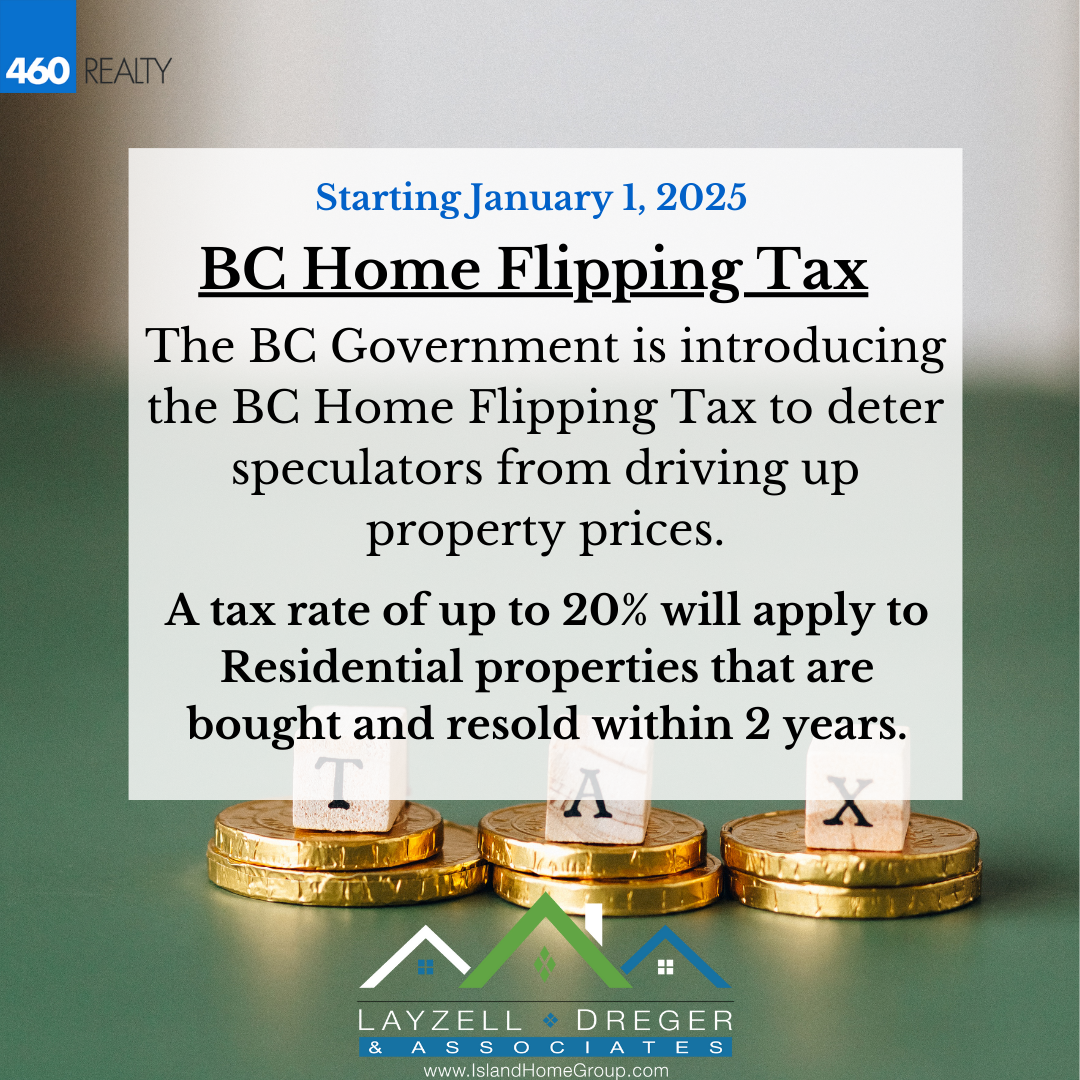
Five Steps to the BC Home Flipping Tax

Happy Friday! Here are Five Steps to the New BC Home Flipping Tax.

Are you looking for more details on this new legislation? Check out the BC Government website: https://www2.gov.bc.ca/gov/content/taxes/income-taxes/bc-home-flipping-tax

Testimonial

Special thanks to Troy-Anne for taking time to leave us this 5 star review 🌟 We are thrilled you had an exceptional experience with our team and never forget that we are always here to provide Real Estate advice, even after completion.

Wishing you all the best in your beautiful new home 🏡

2025 Assessed Values are Now Available!

𝟚𝟘𝟚𝟝 ℙ𝕣𝕠𝕡𝕖𝕣𝕥𝕪 𝔸𝕤𝕤𝕖𝕤𝕤𝕞𝕖𝕟𝕥𝕤 ℕ𝕠𝕨 𝔸𝕧𝕒𝕚𝕝𝕒𝕓𝕝𝕖!

Let’s chat about what this means for your property:
📞 250-585-2601
📧 info@layzelldreger.com